About
A small team, and no layer between you and it.
Every site is built in-house, in the United States. Nothing is subcontracted overseas and nothing is handed to a stranger. The person who answers your email is one of the people who does the work, so there is no account manager relaying questions to somebody you never meet.
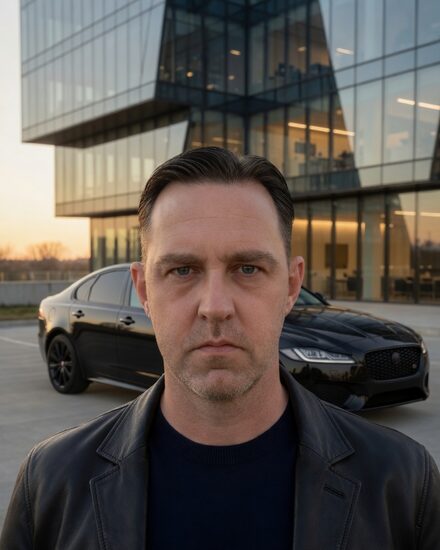
Brad Kinnard, founder and lead developer
Name
Aftermath is an old farming word. It means the second growth: the grass that comes back after a field has been cut.
That is the work. Almost nobody arrives here with a blank page. They arrive with a site somebody else built, that somebody else stopped maintaining, running on a stack nobody wants to touch. The field has already been cut. The job is what grows next.
Process
Written down, not talked about.
- Everything happens over email and a shared screen. No standing meetings, and no call that could have been three sentences.
- Decisions get written down where you can find them again, which is the email you already have rather than a project tool you have to log into.
- You see the site on a staging address before it exists anywhere public, and you see it early, when changing it is cheap.
- Hosting, domain and analytics go in your name from the first day. Nothing is held in an account you cannot reach.
- Every part of the build stays in-house and in the United States. No overseas subcontractors, and no work passed to whoever was cheapest that month.
- Enquiries get an answer within one business day, from someone who has already opened your site and looked at it.
Position
WordPress is a good answer to a question most small sites are not asking.
It is genuinely the right tool when a team publishes several times a week and needs to do it without a developer. That is a real need and WordPress serves it well.
The trouble is that it became the default answer to every question, including the nine-page site that changes twice a year. What that business actually bought was a database, a theme, thirty plugins, a login page facing the open internet, and a standing obligation to keep all of it patched. Then the developer moved on, and the obligation stayed.
So the default here is files. Written markup, one stylesheet, no framework, no build step. There is no admin panel to break into, no plugin to go unmaintained, and no version to fall behind. If your site genuinely needs a CMS, you will be told so and it will get one. It just stops being the assumption.
Proof
Measure this before you believe any of it.
This site is built the way yours would be: written markup, one stylesheet, no framework, no build step. The line at the bottom of every page is your own browser reporting what that page just cost you, and the audit tool will score this domain against yours on the same scale. If the numbers do not hold up, that tells you something worth knowing before you spend anything.
Next
Say what is wrong with it.
A sentence is enough to start. The quote form takes about three minutes if you would rather answer questions than write a paragraph.